“I think I lost the plot.”
I sent that to a friend while I was working on my portfolio. I was having too much fun. He asked who I was building it for. Was I trying to be an IC or a people manager?
My answer was both. I want to be an IC who can lead a team and design strategy, or a people leader who can put gloves on and get into the work. I don’t see it as either/or.
At some point, my portfolio went from being a hiring tool to an expression of my creativity.
My first homepage exploration started in Figma Make, then I moved into Claude. I wanted to see what the tools could do. And honestly, I was kind of feeling myself. It took me about an hour, and I was proud enough to send it to a couple people.
A friend immediately recognized the Claude style. He pointed to the colors and the way it was designed. That was a gut punch. I realized I’d been tweaking the design, but Claude still owned the creative direction. If my friend saw that at first glance, what would someone hiring me think? Okay, yep, nope, this wasn’t going to work like this. I went back to the drawing board.
The thing I learned early on with AI is, you get out what you put in. And it’s true what they say: AI can make everything cheaper. But they don’t realize that cheaper has a double meaning. It does come out faster, but at the expense of the quality. If you can do it in ten minutes, why can’t someone else?
The hiring managers I’m trying to impress can tell. For me, I do have an ego. I took that feedback as a challenge. People I work with talk about my creativity, personality and attention to detail. None of that was in the first draft. Every quality that makes me a great candidate, coworker and manager needed to be evident in the work.
I went back to sketching and drawing before going back to AI. I needed to understand my story, my purpose and my inspiration.
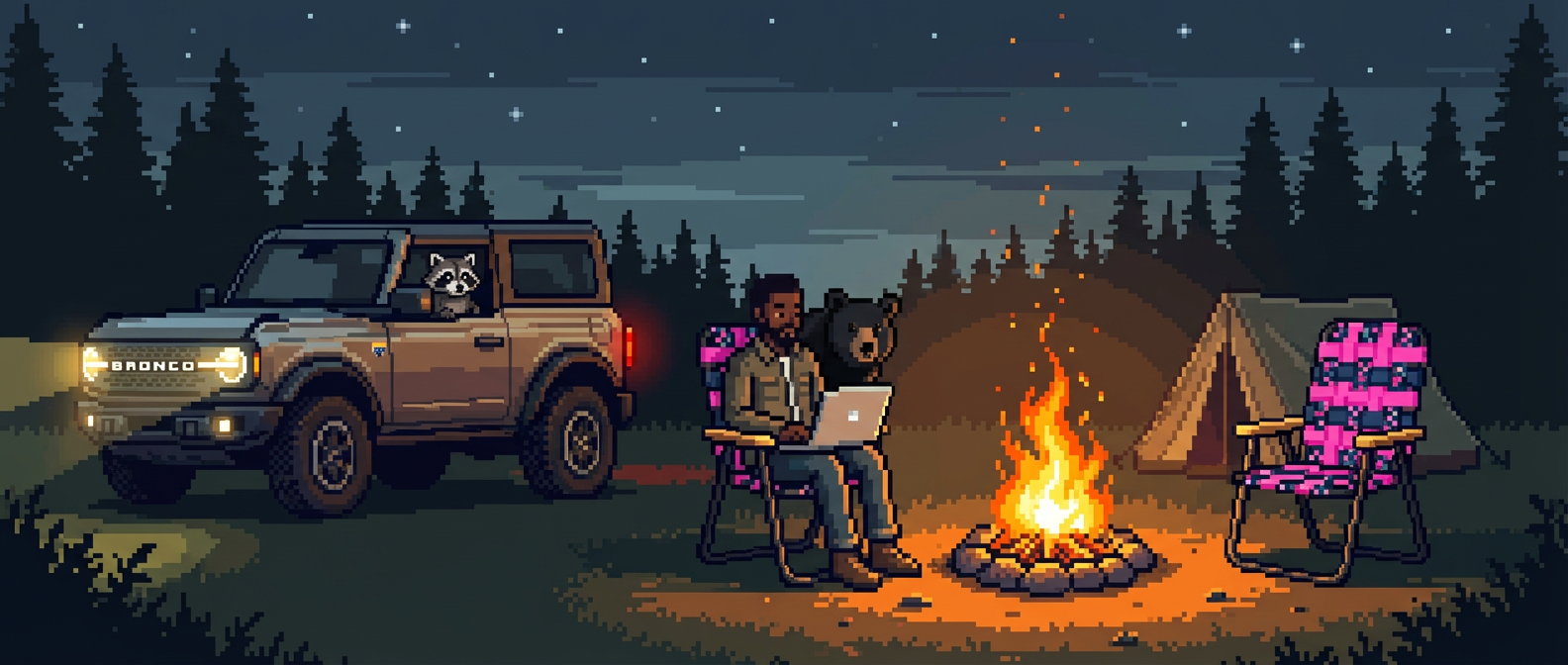

I started in Flash. Those early interactive websites, with hidden features and things to discover, made me fall in love with web design. Let me bring that feeling back. Let me bring that personality back. The websites I was seeing were beautiful, but they felt cold. They’d lost their personality.
Talking with my former coworkers, I realized they understood how I affected the culture, what kind of personality I was, and what I brought to the table in terms of shifting the culture and getting buy-in. If I wasn’t a fit for your culture and your company, I wanted you to sense that early. If I seemed like a fit, reach out. If I didn’t, you could close the browser. No hard feelings. I needed there to be a mutual understanding upfront of what type of person I was.
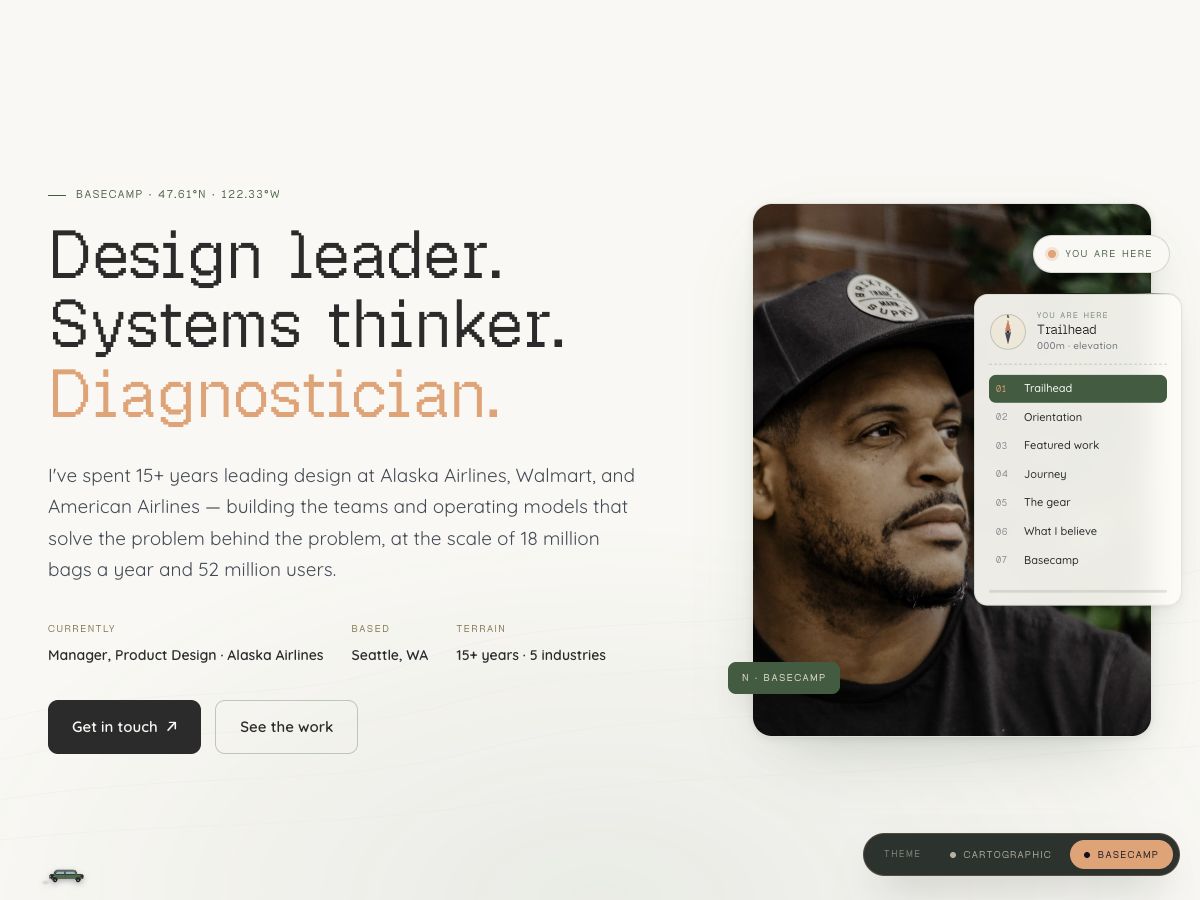
Once I knew what I wanted to convey, I started exploring. First came pixel art. I loved it, but I went too heavy on it, and it got too niche. Around that time, my son and I were really into Mario. That colorful world inspired me to take people through an adventure. I wanted it to feel playful and interactive.
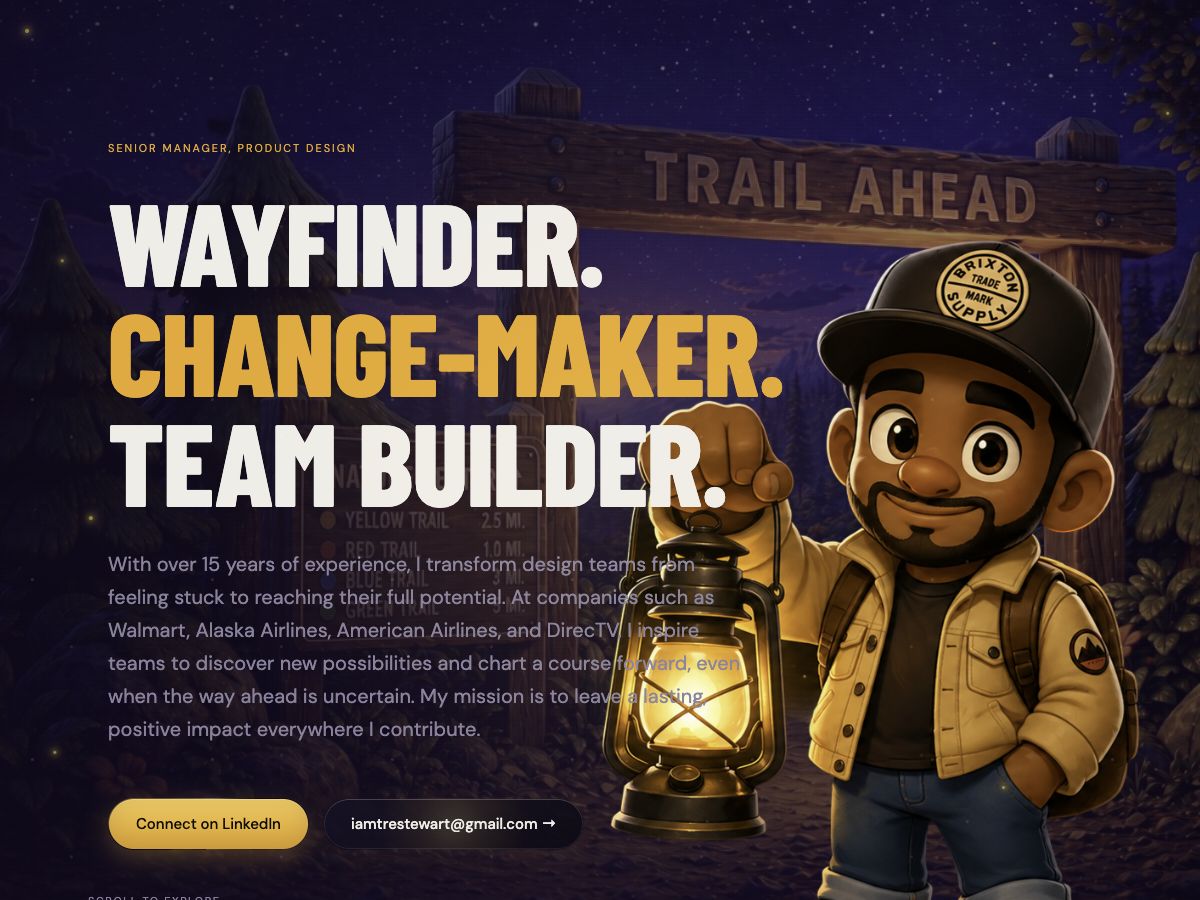
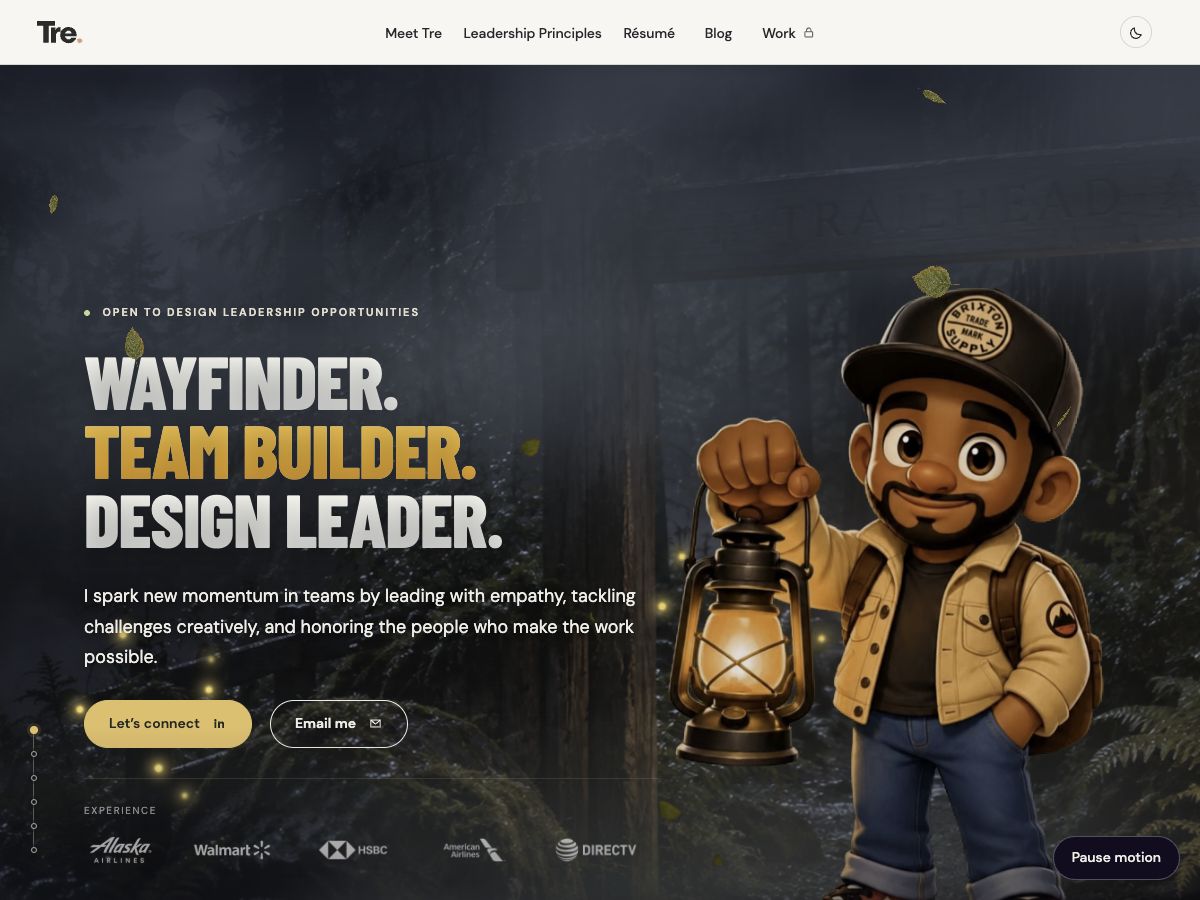
I had a header and a footer, and I was figuring out the middle. I get feedback early and often because I don’t want to hold onto something and be surprised later.
A friend liked the header and footer. He was impressed, but he wasn’t. He shared it with a coworker, and the feedback was that it was cool, but there wasn’t much going on. They showed me other candidates’ portfolios as examples of the quality they were looking for. My friend suggested that maybe I’d been in corporate America too long and my work had grown stale, or something to that effect.
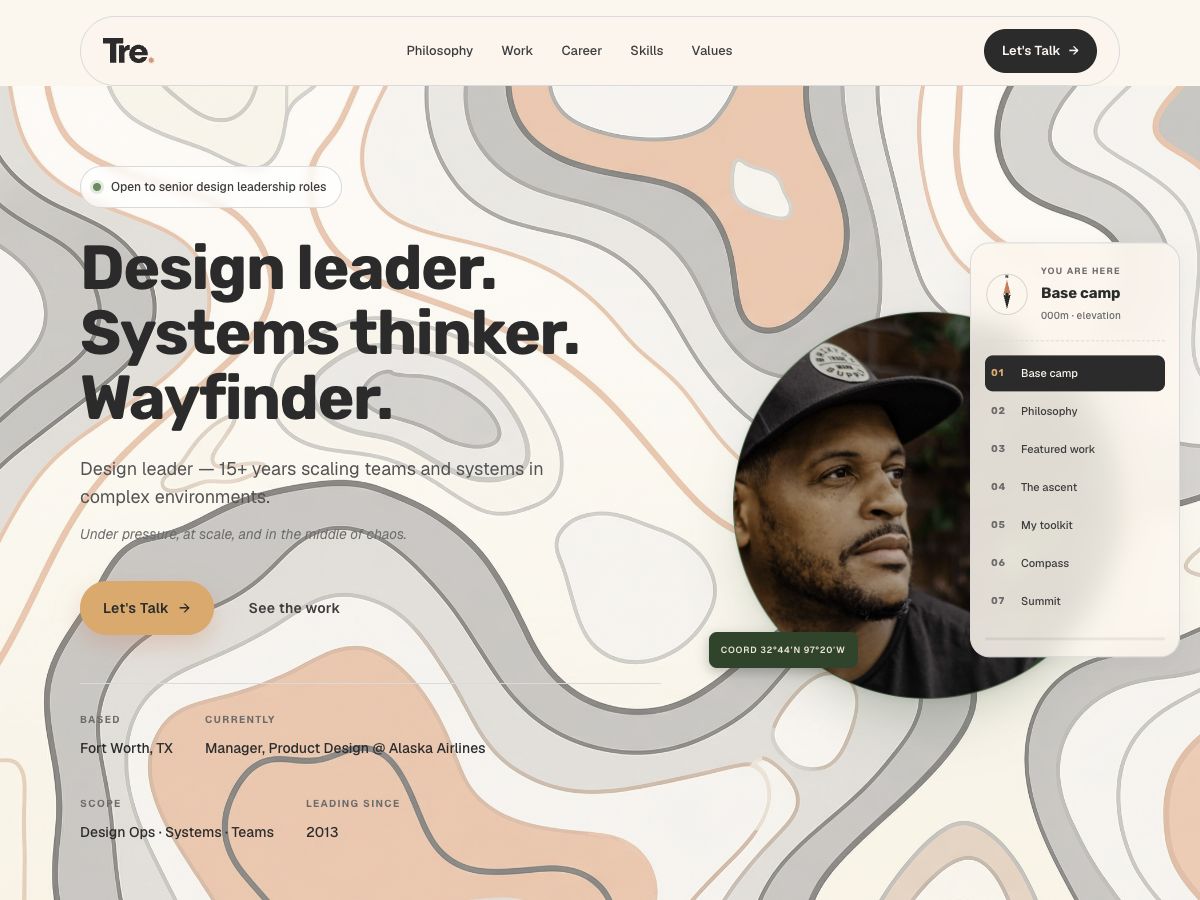
I knew he didn’t mean any harm. I took it as a challenge. I was going in the right direction, but I needed to go further. I was playing it safe, trying to be cute, and I wasn’t taking full advantage of AI.
Chefs can make ramen amazing, whether it’s store-bought or made by hand. I challenged myself to see what I could do with AI. How could I turn it into my vision? The animation, the attention to detail, the nuance, the stories: I wanted all of it to feel like me.
Sometimes that meant spending a couple more hours refining an idea, finding another solution or learning new tools. I explored 3D, different software and frameworks. When AI suggested a lower-effort version of my header, I kept pushing. I knew what I wanted. Learning the technical side and asking the right questions helped me get there.
Taking the office somewhere stranger
The Severance exploration became a spoof of the show, with me playing the design division’s Milchick. The first version had the group standing together. I wanted each section to feel like a still from the show, so the next direction put the team at their cubicles and brought me closer to the camera.
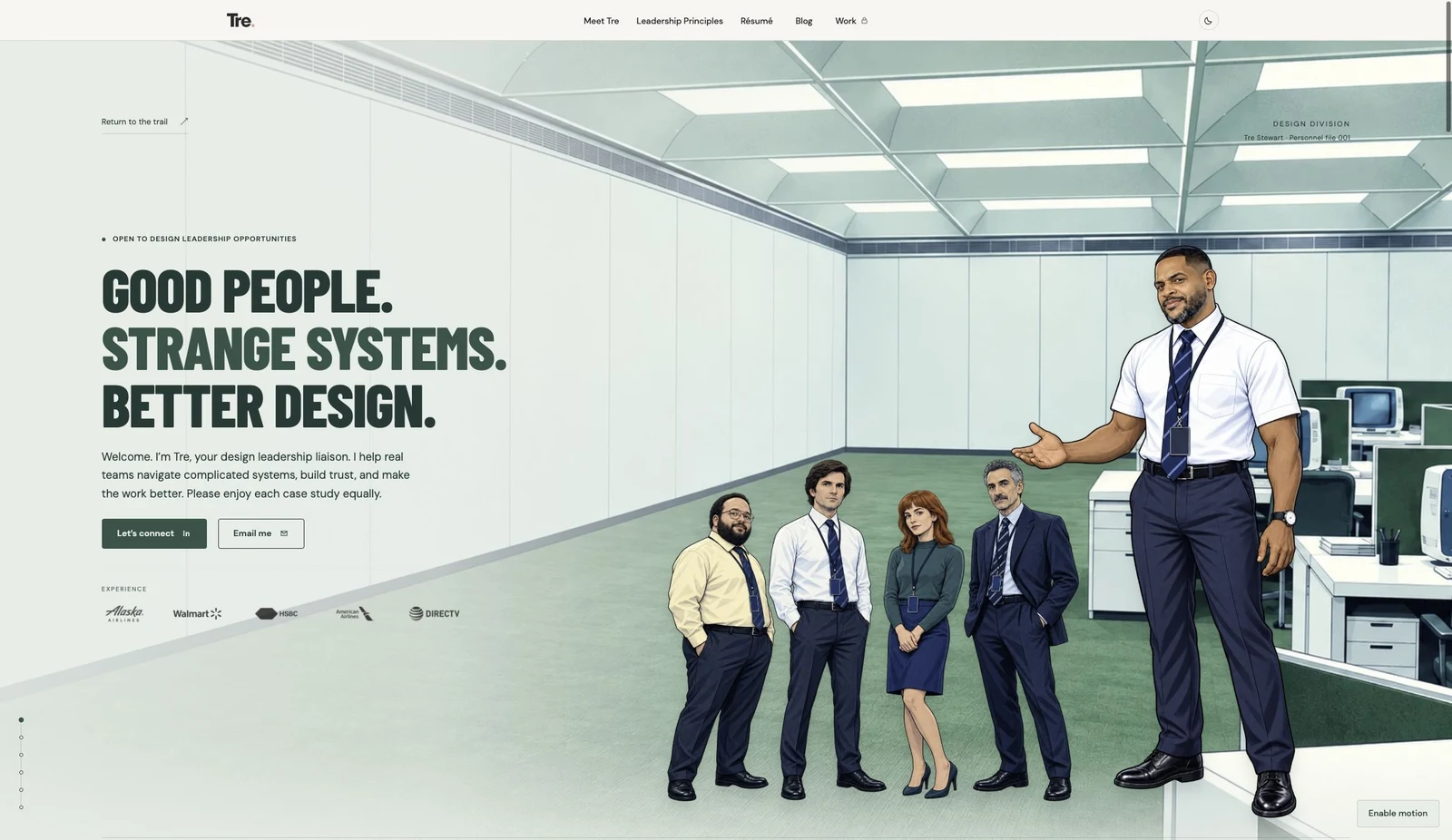
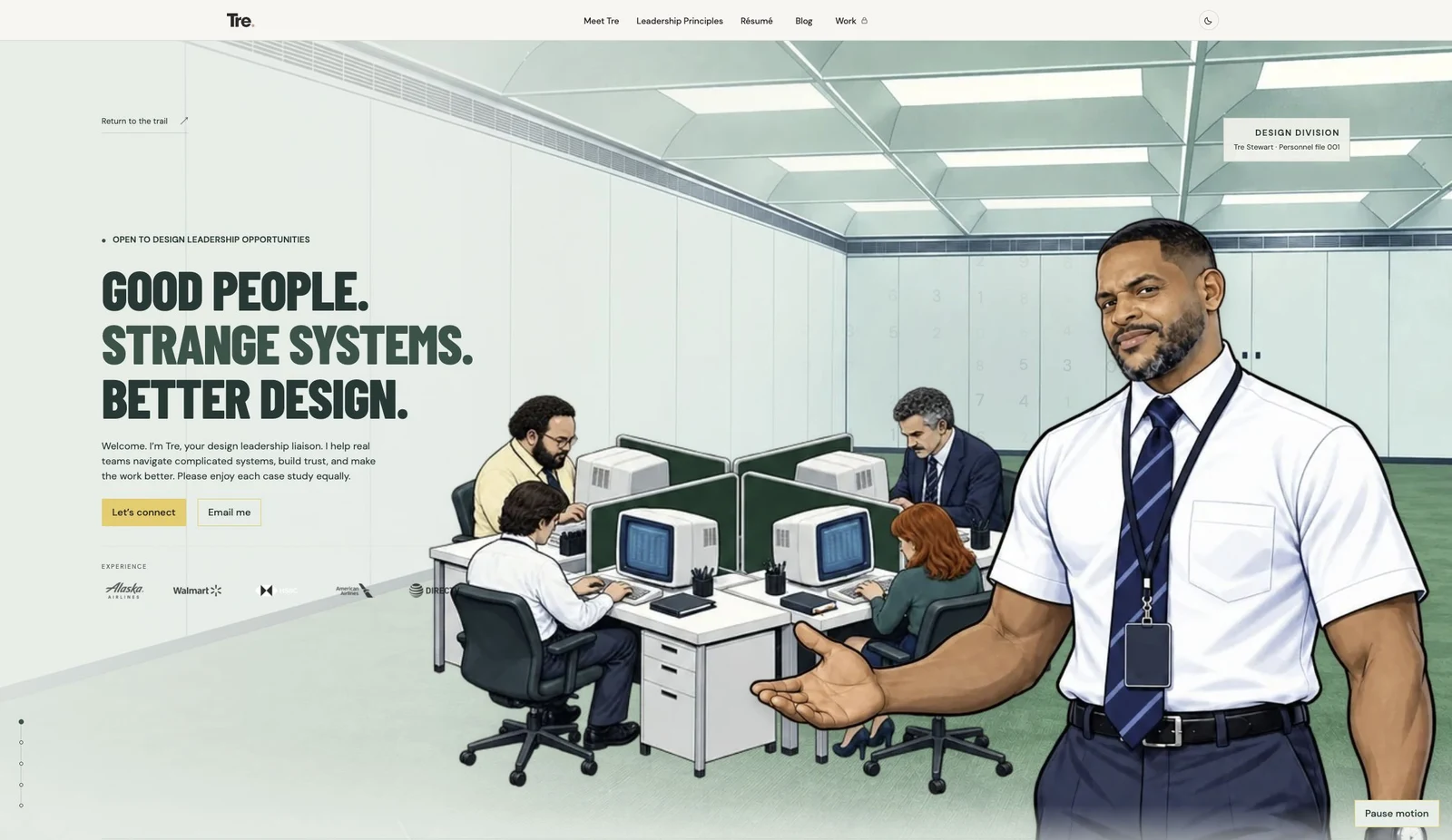
The details kept changing: head and body proportions, the placement of the desks, how slowly the characters moved, and how the party lights colored their faces and clothes. The real team photos stayed in the testimonials. The spoof could be playful, but the work and the people behind it still needed to be real.
The feedback started changing. People were saying, “this is cool” and “I like where you’re headed.” I could see my personality in the work. I was having more fun with it. That’s how I knew I was getting closer.
The Playground is part of that. It’s like the tracks that didn’t make the album. Those ideas are still worth exploring, even if they don’t belong on the main page. I can have fun with them and still ask, why is this here? What’s it doing for the experience?
I’m still figuring it out. But I’m putting my voice into the work now, making those calls myself, and using AI to help me get there.
AI is an amazing partner, but you still have to take the lead.