Clear Paths · Issue 01 · Alaska Airlines
Bags Don't Care
As Alaska and Hawaiian combined, I refocused baggage design on tools agents could trust and bags arriving with passengers.

- My role
- Design manager leading six to nine designers across employee tools, including baggage
- My contribution
- Led the baggage design team, set direction, reviewed the flows, and organized work with partners
The case, at a glance.
Reliable loading depended on more than another feature. Research changed our priorities, and shared discovery gave Design a voice in deciding what to build.
- Situation
- Bags missed their flights.
Agents lacked reliable bag information. Bringing Hawaiian into the operation also depended on replacing third-party apps on time.
- Task
- Agents needed a dependable replacement.
Lead the baggage design team toward fewer delayed bags and a tool agents could trust, while preparing to bring Hawaiian into the operation.
- Action
- Research changed our priorities.
I used research to reset priorities, pushed for scanner-first loading, and organized design work so we could test ideas and resolve risks with partners earlier.
- Result
- Design became a planning partner
I led shared discovery and planning with Product and Engineering. Earlier testing and joint decisions helped the work move faster and get back on track for Hawaiian integration milestones.
01 · Situation
A missed bag puts trust at risk.
A passenger expects their bag to arrive with them. When it does not, the airline has failed to deliver on its promise and put that passenger’s trust at risk. As Alaska and Hawaiian combined, we needed to bring two baggage operations together and cut delays.
Missing our milestones would delay the integration and force Alaska to renew third-party app contracts, costing millions of dollars. The deadline mattered, but so did whether agents could rely on the replacement to get bags onto the right flight.

A bag scanned at the wrong gate must be transferred to the right flight.
01The bag is scanned at the wrong gate.
The scan identifies a misplaced bag. It still needs to reach the gate for its passenger’s flight.

The next gate cannot see whether the bag is on its way.
02The bag is set aside for transfer.
Agents start moving the bag to the correct gate, but the receiving team cannot see where it is or whether it is on its way.

The plane leaves. The bag stays behind.
03The bag misses its flight.
Agents know the bag was scanned elsewhere, but cannot locate it before departure. Its passenger’s flight leaves without it.

The passenger arrives, but their bag doesn’t.
04The bag waits to be found.
The bag remains at the departure airport awaiting recovery. Its passenger arrives without their belongings or an answer about when they will get them back.
02 · Task
Loading needed a shared plan.
I led the baggage designers, setting direction, reviewing work, and helping them decide where to focus. With Product, Engineering, Research, and airport teams, I needed to make the new tool dependable for daily loading and prepare it for Hawaiian’s operation.
The backlog was full of feature fixes, but we lacked a shared vision for making loading more reliable. Shipping another feature told us little about whether agents could get bags onto the right flight.
Agents still preferred the legacy app. When the new tool could not handle an unusual case, they returned to what worked. Their H2 2025 feedback said the app was slightly easier to use but less reliable; satisfaction had not improved.
03 · Action
I asked why agents returned to the older tool.
Access to the new app did not explain whether agents could depend on it. I wanted to understand their fallback, so I asked Research to investigate. Incomplete scan histories, approximate counts, and late missing-bag information gave us concrete problems to address.
I used those findings to shape the 2026 baggage design vision. Each proposed feature needed to explain which loading problem it solved, what it depended on, and how we would know it helped.
Start where the operation would challenge the design.
I chose Seattle–Tacoma as a starting point because its scale and complexity would challenge our approach. I prioritized bag status, scan confirmation, and error recovery over matching every legacy feature. Product set release commitments; Engineering and airport teams worked through system and operating constraints with us.
Give designers time to investigate before build.
I sized design work by effort so designers could tackle related problems together, even when engineering would build them later. For aircraft-container loading, I narrowed the first release to give a designer time to test before a contract deadline. Routine loading came first, but changes and unusual cases still needed design work.
Bring partners into the problem while scope can change.
I brought Product and Engineering into discovery and smaller working sessions while scope could still change. One early review exposed an unclear dangerous-goods state and a misleading label before build. Engineering asked to join weeks earlier and see unusual cases before planning; I still needed to make that involvement routine.
Decision lens
Three decisions that redirected the work.
What I changed after hearing from agents and comparing the feature list with Alaska’s goals.

OriginalSmall targets meant gloves off. Rain made precise taps frustrating and error-prone.
UpdatedScan first, touch only to correct. Larger targets keep gloves on, with fewer chances for error.
Design for reliable daily use
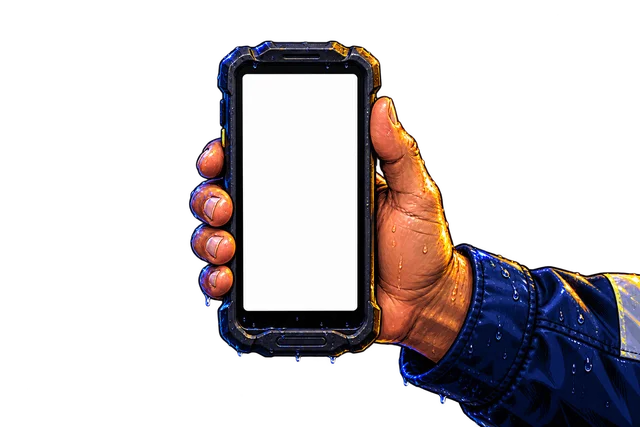
Agents in cold and wet conditions struggled with precise touchscreen taps. I asked the designers to test a scanner-first approach. The resulting design used scanning for routine loading and larger touch controls for corrections, so agents could keep their gloves on.
- Illustrated phase 1: rollout showed access, not trust.
Having the app doesn’t mean trusting it.
01Rollout showed access, not trust.
Deployment told us who had access. It did not tell us whether agents could rely on the app to finish loading a flight.
- Illustrated phase 2: research showed what agents were missing.
Missing information made the new tool hard to trust.
02Research showed what agents were missing.
Research identified incomplete scan histories, approximate counts, and missing-bag information arriving too late in loading.
- Illustrated phase 3: getting a bag onto its flight took more than an interface fix.
The problem crossed scanners, records, and gate handoffs.
03Getting a bag onto its flight took more than an interface fix.
Scanners, bag records, and gate handoffs all affected whether a bag made its flight. Designers needed Engineering and airport partners to work through those connections.
- Illustrated phase 4: i organized design work ahead of build.
SEATAC first. Plan for loading errors.
04I organized design work ahead of build.
I sized design work by effort so designers could test related loading and error-recovery flows together, ahead of engineering’s build schedule.
A closer look
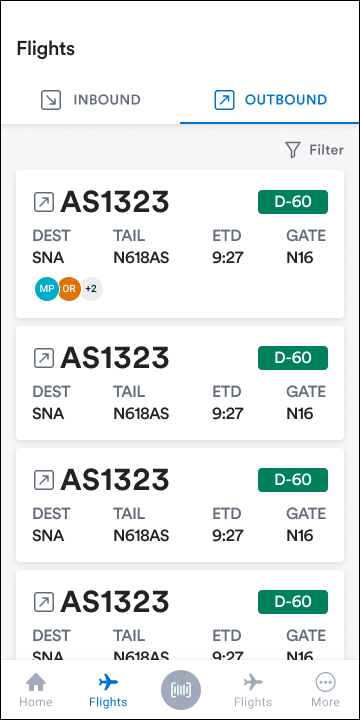
The resulting loading design.
The team’s designs put scanning at the center of loading. Explore the flow from choosing a flight to reviewing its load.


04 · Result
Design helped decide what to build.
The backlog had started with feature fixes. I initiated and led smaller working sessions that brought Product, Design, and Engineering into shared investigation. Pairing designers with their partners throughout the process gave them time to explore and test before build and kept everyone involved in the decisions. Working relationships became smoother, development moved faster, and we got back on track for the Hawaiian integration milestones.
The resulting loading designs centered on scanning, with clearer bag status and touch controls for corrections. A May 2026 review reported the app available across the network, replacing an older mobile tool. Agents welcomed easier switching between load types and warnings about missing scans, but still reported rescanning, manual entry, and report errors. The rollout review did not measure the change in bag delays or agent satisfaction.
My initiative gave Design a role in choosing and planning the work and brought designers and their partners into the same decisions. The team regained momentum toward Hawaiian’s integration milestones and carried the design direction into the replacement loading tool.

Fin.


Special thanks
To the design team who carried the detailed work from field questions into the flows shown here.
Keep reading
Choose the next issue.
 Related leadership story
Deployment Isn't Adoption
What it took to align teams around release readiness and shared accountability.
Read issue People leadership
The Goodwill Bank
How context and coaching gave designers more room to own decisions.
Read issue Strategy work sample
Identity Crisis
A longer-term identity direction connecting customer journeys and partners.
Read issueContinue the conversation